
Circular ecosystems are not built in siloes. New innovations that enable circularity are only one part of the ecosystem, but they are essential for showcasing what a truly circular world could look like. Kiilto’s collaboration with the ARKI 135 Circular Hub is just one example of how a sustainable built environment can be co-created by testing and sharing circular innovations.
The circular economy hub presents the perfect opportunity for showcasing Kiilto’s innovative Debonding on Demand technology’s potential application in the construction industry. Ecosystem building is vital for circular businesses to thrive, as circularity is seldom built by one actor alone.
How debondable adhesives could transform the construction industry
In the past, adhesives have been a significant challenge towards circularity, as permanent bonds cannot be broken down without the destruction of the material layers glued together. The new technology allows for example tiles to be removed in one piece and reused after having been installed. The manufacturing process of ceramic tiles is energy intensive, creating large carbon emissions. The controlled debonding of tiles opens the door to lowering greenhouse gas emissions and increasing circularity in the construction industry by giving a second life to the removed tiles.
“The technology enables not only the repairing or recycling, but also the reuse of old materials. This can reduce waste generation significantly, while also saving materials, time, and money,” explains Raija Polvinen, Chief Ecosystem Officer at Kiilto.
The controlled debonding of ceramic tiles from surfaces with heat presents a groundbreaking new opportunity for more efficient repairing and renovating of bathrooms and other tiled areas. So in the future, that intensive bathroom renovation might look a little less messy and complicated. The Debonding on Demand technology is already in commercial use in the furniture industry, enabling simpler reupholstering and recycling of textile and laminate surfaces. Now the pilot project with Forum Virium Helsinki and Business Helsinki’s ARKI 135 Circular Hub allows for another promising use case in ceramic tile installation to be put to the test.
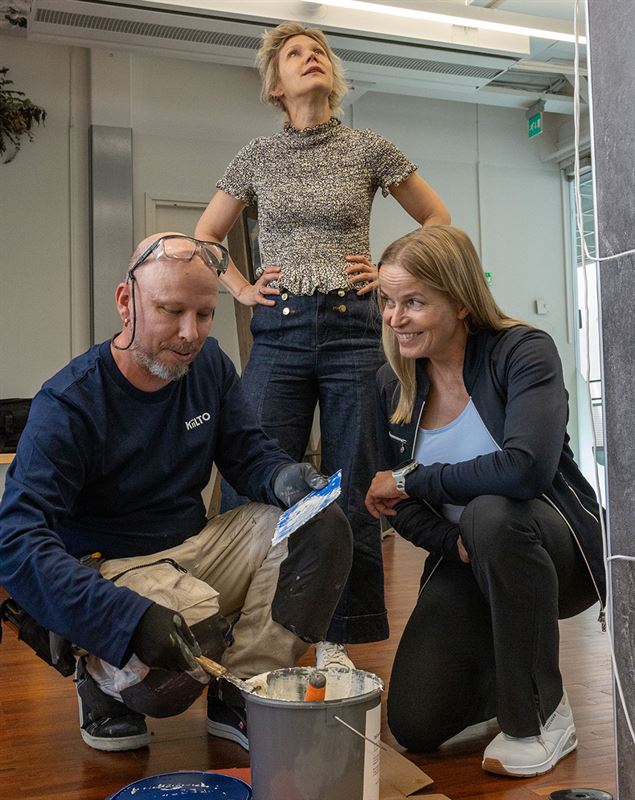
Pilot projects enable showcasing innovations in real-world contexts. (left: Kari Heino, Kaisa Spilling and Raija Polvinen)
Testing circular solutions in real-world projects
The City of Helsinki’s ambition is to build bridges within the ecosystem of circular actors through the ARKI 135 Circular Hub, which works as both a meeting place and a showroom for circular innovations. Concrete examples, such as Kiilto’s Debonding on Demand, not only showcase what solutions exist, but can also serve as an inspiration for what could be.
“Innovative solutions like Kiilto’s Debonding on Demand, by enabling the reuse of materials, offer novel possibilities for construction and the real estate sector and thus also supports sustainable cities of the future,” says Kaisa Spilling from Helsinki City’s own innovation company Forum Virium Helsinki. “As materials are limited, businesses must find innovative and disruptive ways to ensure long-term viability.”
Pilot projects are a valuable tool for new innovations to be tested. Collaborations in pilot projects lead to important learnings or even other kinds of partnerships and synergies can be established. Sometimes the pilot will lead to redirection or perhaps even a rejection of a project, which are also valuable learnings for novel solutions. Therefore, it’s essential that places like the ARKI 135 Circular Hub enable all kinds of organizations to test their solutions.
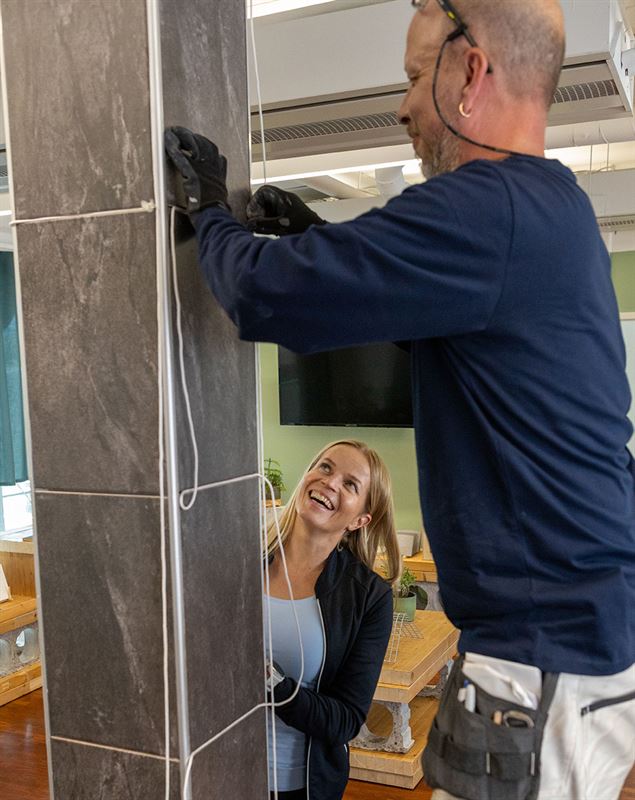
Debondable tile adhesives can be applied exactly like regular tile adhesives and removed easily with heat.
Together towards a better built environment
Kiilto is committed to building a better built environment through the SUPER Healthy Building ecosystem, which unites academia, startups, and industry players. The Debonding on Demand technology is enabling adhesives to play a key role in a circular built environment. While the technology still creates strong and reliable adhesive bonds, it allows for permanent bonds to become a thing of the past. The next step is to bring these solutions to scale through collaboration.
“At Kiilto, we have developed a toolbox that enables us to transform almost any adhesive type to be debondable,” says Polvinen. “Now we are searching for forerunners from different industries, who are willing to take this technology from the laboratory to a product fitted for their specific application with us.”
The invitation is open for all future builders, looking to create a world where materials live more than once and what once was waste turns into opportunity.
Interested in a pilot project?
Get in touch below.

Let’s build a circular future, together
Circularity doesn’t happen on its own. It takes action. With the right technology, we can reduce waste, recover materials, and rethink how things are made. If you’re looking for practical ways to meet your sustainability goals, let’s talk.
Contact Raija Polvinen, Chief Ecosystem Officer
raija.polvinen@kiilto.com | +358 40 081 8833
Or leave your details below and we’ll be in touch.