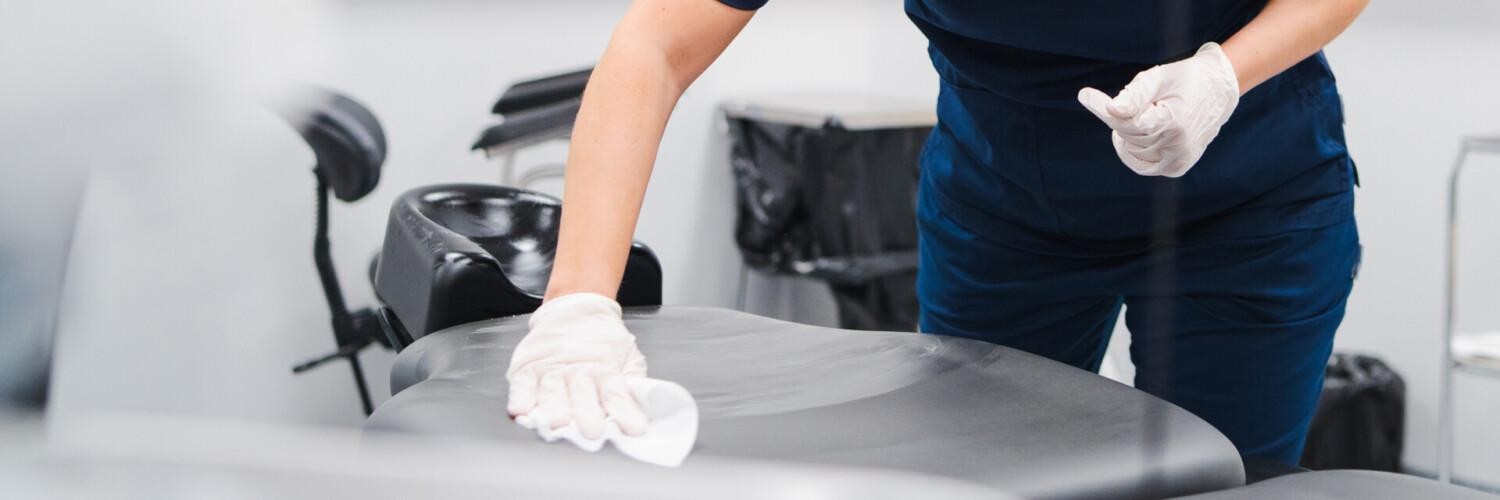
Making the right choice easy with disinfectant wipes
Healthcare-associated infections (HAIs) and antibiotic resistance remain significant challenges across many countries, including the Nordic region¹. Globally, approximately 1 in 10 patients is affected by a healthcare-associated infection². Across the EU, 7.1 % of patients, on average, developed a HAI during their hospital stay in 2022–2023¹.
A healthcare-associated infection cause considerable harm to patients and place a substantial burden on health care systems. In Europe, an estimated 9 million HAIs are reported annually in both acute and long-term care settings, leading to 25 million additional hospital stays and costing up to 13–24 billion euros².
Effective hand and surface disinfection plays a crucial role in reducing the spread of bacteria and viruses, particularly in healthcare, dental and veterinary settings. To achieve consistently high compliance, solutions must be simple and practical to use. Ready-to-use disinfectant wipes support this by making the correct procedure both quick and easy.
Benefits of ready-to-use disinfectant wipes
Ready-to-use disinfectant wipes offer several practical advantages:
- Simplify workflows – you can use the wipes directly from their package, with no preparation needed.
- Reduce the risk of errors – no dilution or mixing required; the correct concentration is ensured from the start.
- Improve disinfection performance – the wipes are designed to release disinfectant onto surfaces rather than absorbing it.
- Support good hygiene practices – single-use format helps reduce the risk of cross-contamination between surfaces.
- Optimize chemical use – ready-to-use wipes typically require less disinfectant compared to liquid solutions used with paper towels.
- Enable wider use – wipes are simple enough for use by visitors or patients, for example in the bathroom.
- Improve ergonomics – using wipes reduces the need to handle and lift larger detergent containers throughout the day.
Environmental considerations
It is often assumed that ready-to-use wipes generate more waste than liquid disinfectants. In practice, both methods result in waste, as used wipes or paper towels must always be discarded.
Ready-to-use wipes supplied in flow packs can minimise packaging waste. These packs use relatively small amounts of soft plastic compared to rigid one-litre bottles commonly used for liquid disinfectants. This can reduce the volume of packaging materials requiring disposal.
Efficiency in daily workflows
While the unit cost of ready-to-use wipes may be slightly higher than liquid disinfectants combined with dry wipes, this comparison does not reflect total usage. Additional disinfectant is often required to properly moisten dry wipes, which can increase overall consumption.
Ready-to-use wipes also save time, as they are immediately ready for use. In busy healthcare environments, this can make a practical difference. Faster access to disinfection may improve consistency, particularly in situations where surfaces might otherwise be skipped due to time constraints.
A complementary approach
Ready-to-use disinfectant wipes and liquid disinfectants both serve a purpose. Liquid solutions may be better suited for larger surfaces, while wipes are convenient for smaller areas and high-touch points.
Using both as part of a structured hygiene routine can support effective and practical infection prevention.
FAQ
Do ready-to-use wipes provide effective disinfection?
Do disinfectant wipes help reduce errors in cleaning?
Are ready-to-use wipes more wasteful than liquid disinfectants?
When should ready-to-use disinfectant wipes be used instead of liquid disinfectants?
Can patients or visitors safely use disinfectant wipes?
What factors should be considered when selecting disinfectant wipes?
You might also be interested in
¹Health at a Glance: Europe 2024, State of Health in the EU Cycle Report https://www.oecd.org/en/publications/health-at-a-glance-europe-2024_b3704e14-en/full-report/component-51.html
²Key facts and figures, World Hand Hygiene Day https://www.who.int/campaigns/world-hand-hygiene-day/key-facts-and-figures