
Industrial adhesives are essential in industries such as construction, automotive, electronics and packaging. However, their production and use cause significant carbon dioxide emissions, as they often use fossil components. Kiilto conducts ongoing research into the use of low-carbon raw material alternatives.
One solution to the problem is to switch to biobased raw materials. These come from renewable sources, such as plants and agricultural side streams. Switching to biobased adhesives will not only reduce dependence on fossil raw material, but it will also contribute to reducing the carbon footprint of adhesives and promoting the circular economy.
"Kiilto, like many of its clients, has strict environmental targets. In addition, legislation is constantly tightening, which is why we strive to replace fossil raw materials with renewable or recycled raw materials", says Maija Kulla-Pelonen, R&D Manager at Kiilto.
"There are currently not enough biobased raw material alternatives on the market. We also want to find new solutions for this, for example by using side streams", she continues.
Increasing the use of biobased components through mass balance calculation
There are two ways to increase the biobased content of products: by using a mass balance calculation or by increasing the proportion of fully biobased raw materials.
A mass balance calculation means that some of the fossil raw materials used in the raw material production process are replaced by biobased raw materials. This makes it possible to calculate the amount of biobased raw materials in the final raw material, even if all the raw materials are mixed in the production process.
"When using a mass balance calculation, the properties of the final raw material remain the same, even when biobased raw materials are added", explains Kulla-Pelonen.
A biobased raw material may not have exactly the same properties as a fossil raw material. This means that more work is needed to get the raw materials to work properly in a given product, without compromising on properties, quality or safety. On the other hand, the idea that biobased materials weaken products’ properties is a misconception. Nature is full of chemistry.
"For example, certain biobased raw materials, such as pine resin, have been used in products such as hot-melt adhesives for decades. These materials have been used because they have been found to work very well. They were not chosen just because they are biobased", says Kulla-Pelonen.
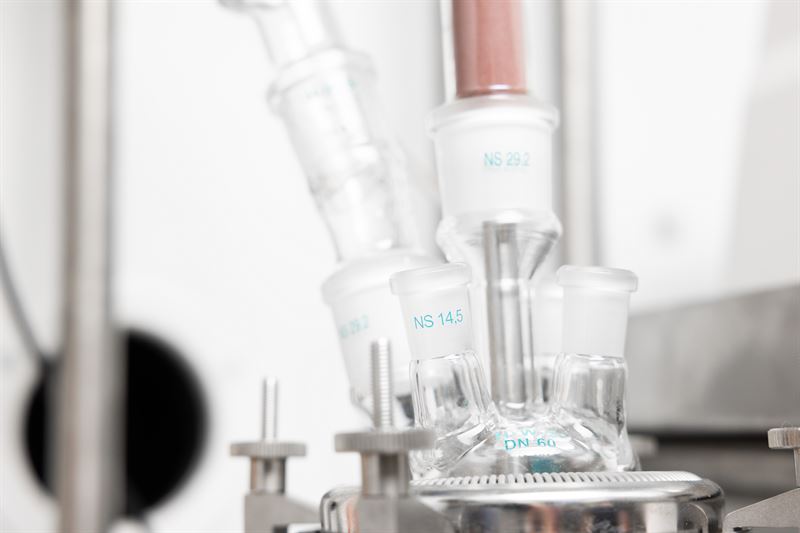
Leveraging side streams in the research of biobased raw materials
The side stream approach means recovering and reusing by-products or waste created in various processes instead of disposing of them.
"For example, the forest industry produces hemicellulose, lignin and cellulose as its side streams. We are involved in several research projects to find out how these raw materials can be used in adhesives", says Kulla-Pelonen.
Research on increasing the use of biobased raw materials is carried out in collaborative projects but also at Kiilto's own laboratory. For example, Kiilto has cooperated with Åbo Akademi University by commissioning a thesis project on the utilisation of hemicellulose. The results were used in Kiilto's product development.
"In the project on hemicellulose, we came up with a new type of solution that has not existed before. However, more work needs to be done before it can enter production. At the moment, we are optimistic about finding new types of components this way", says Kulla-Pelonen.
High demand for biobased raw materials in the future
The future of biobased raw materials looks promising.
However, the transition may pose challenges in the availability of biobased raw materials created through side streams.
"The growing demand for renewable raw materials raises concerns about the availability of biobased side streams, as everyone will want to use them in the future. The recycling of raw materials, such as plastics, is also becoming more and more important, so that the same raw material can be used more than once", says Kulla-Pelonen.
In addition to reducing the carbon dioxide emissions of industrial adhesives, Kiilto monitors the regulation of carbon dioxide emissions from cement, and tests innovations in its cement-based products. Read this article to find out how!