Companies are increasingly expected to deliver measurable results, efficiency and rapid responses. At the same time, the need is growing for something that cannot be measured quite so straightforwardly: understanding, empathy, creative problem-solving and the ability to make sense of a complex world. Art can serve as a way for developing these capabilities.
Art opens a window away from one’s own perspective and towards another person’s reality. It makes visible the complexity of humanity and of the phenomena around us. In companies, this can mean a better ability to understand customers, colleagues and the changing society. The capacity to examine complex phenomena and respond to them. The conditions for better leadership. This is not about soft values, it is about a fundamental competitive advantage.
Many organisations view art purely through the lens of brand or visibility. This is understandable but also limiting. The value of art does not arise solely from what it does for a company’s profile or brand in the short term, but from what it enables over the long term.
When art is given space without a precisely defined purpose, it begins to have a deeper effect. Art inspires and generates insight. It creates space for thinking, supports wellbeing and offers tools for examining phenomena that have no straightforward answers. It acts as a training ground for new perspectives and solutions — precisely the kind needed to tackle challenges such as the climate crisis and biodiversity loss.
Kiilto’s time horizon extends to 2080. This means that not everything needs to be tied to immediate benefit. Art is part of this thinking: an investment that builds our capacity to meet the future.
At its best, art does not remain a standalone project but becomes part of everyday life. At Kiilto, this is reflected in art within the working environment, in values-based partnerships and in supporting artists at different stages of their careers, with the goal of making art accessible to a wider audience.
This kind of approach is not based on visibility, but on values. It builds connections — among Kiiltonians, and between Kiilto, its customers, stakeholders and society at large.
In a world where complexity is growing and answers are rarely simple, companies need the ability to see more broadly. Art does not provide ready-made solutions, but it helps us understand, think creatively and question assumptions.
And often, it is precisely those things that make the difference.
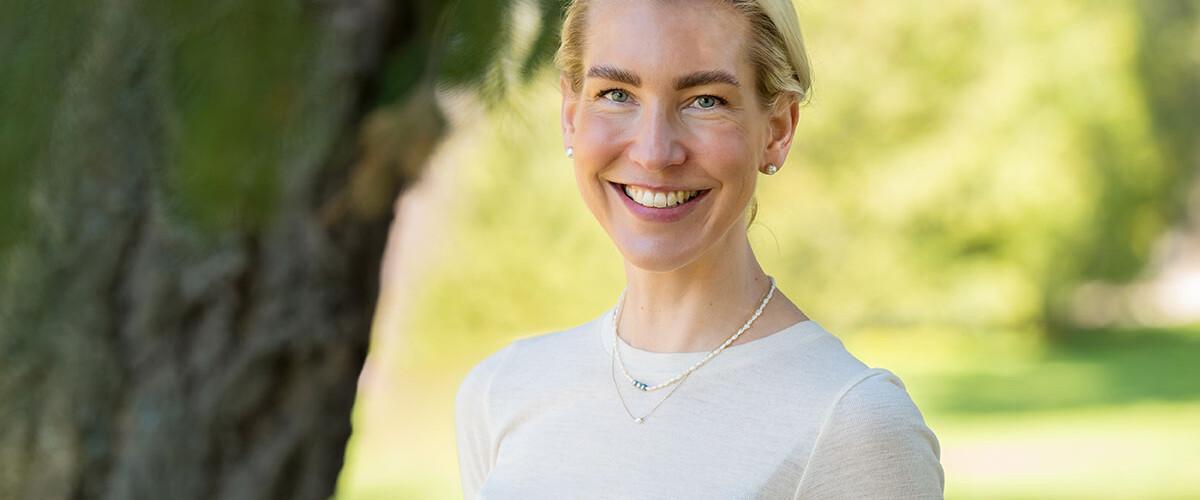
Eeva Solja-Wulff
Deputy Chair of the Board, Kiilto
This text was originally published in the Tampere Chamber of Commerce magazine.